

Advanced Implant Preparation
Sinus Lift Treatment
Rebuild upper jawbone height and create a stable foundation for dental implants.
A sinus lift—also called sinus augmentation—adds bone to the upper back jaw where bone has been lost. By gently raising the sinus floor and placing graft material, it builds the support needed for long-lasting dental implants.
Your First Choice for Cosmetic Dentistry
What Is a Sinus Lift?
At Gage Dental Care, the upper back jaw is one of the trickiest spots for implant placement, thanks to limited bone height and its closeness to the sinus cavity. After tooth loss, gum disease, or trauma, there may simply not be enough bone to securely anchor an implant.
A sinus lift raises the sinus membrane and places bone graft material beneath it, encouraging new bone to form and improving implant stability.
How the Procedure Works
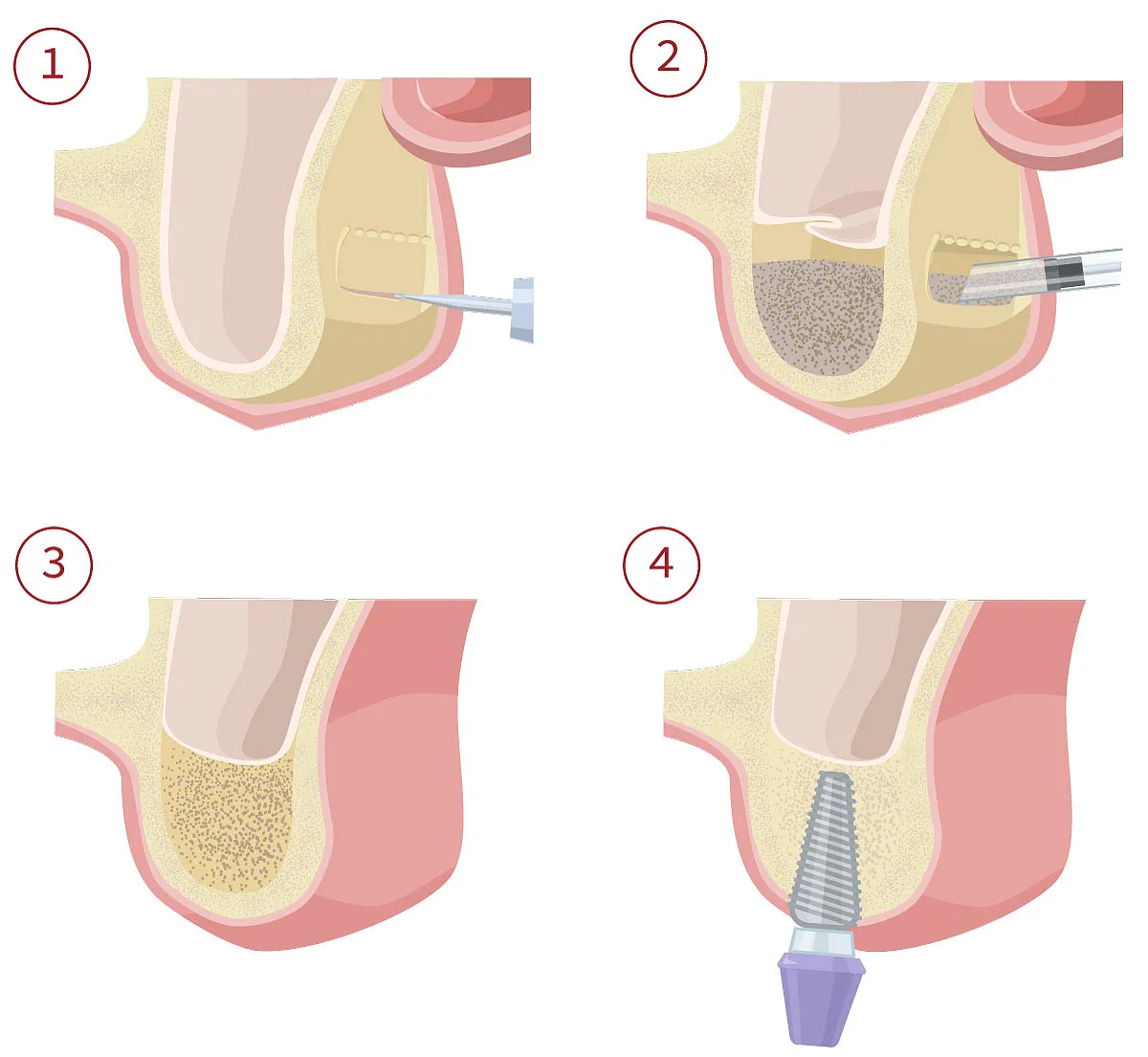
The technique varies with your anatomy and goals. In a common approach:
- An incision exposes the jawbone.
- A small opening is created in the bone.
- The sinus membrane is gently lifted upward.
- Bone graft material is placed into the new space.
- The area is closed to allow healing and bone regeneration.
Healing usually takes four to twelve months as the graft integrates into strong, natural bone. In some cases, implants can be placed at the same time as the sinus lift.
Why a Sinus Lift May Be Recommended
- Insufficient bone height in the upper jaw
- Bone loss following tooth extraction
- Advanced periodontal disease
- Preparation for implants in the molar region
Personalized Bone Grafting Options
A range of graft materials may be used—including biocompatible synthetic or other regenerative options—chosen for your specific needs. The aim is predictable bone regeneration and lasting implant success.
Comfort & Recovery
Sinus lift surgery is performed with local anesthesia, with sedation options available for added comfort. Most patients have mild swelling or soreness that settles with proper aftercare, and detailed post-op instructions help keep recovery smooth.
Sinus augmentation is carefully planned to raise implant success rates and provide stable, long-term restorative outcomes.
Sinus Lift FAQ
- Is a sinus lift painful?
- It’s done with anesthesia for comfort. Most patients report mild soreness similar to other dental surgeries.
- How long does healing take?
- Bone regeneration typically takes four to twelve months before implants go in, depending on your healing.
- Can implants be placed at the same time?
- Sometimes, if enough stability can be achieved, implants are placed during the sinus lift.
- Why is the upper jaw harder for implants?
- The upper back jaw often has less bone density and sits close to the sinus cavity, which can limit placement without augmentation.
- Is sinus lift surgery safe?
- Performed by a trained specialist, it’s considered a safe, predictable procedure.
- What materials are used for the graft?
- Various biocompatible grafting materials may be used to encourage bone regeneration and long-term implant support.
- What if I don’t get a sinus lift?
- Without enough bone height, implants in the upper jaw may not be stable—or possible at all.
- How do I know if I need one?
- A thorough exam and imaging measure bone height and reveal whether sinus augmentation is needed for implant placement.